

Starlink offers free internet in Venezuela after US airstrikes and Maduro arrest
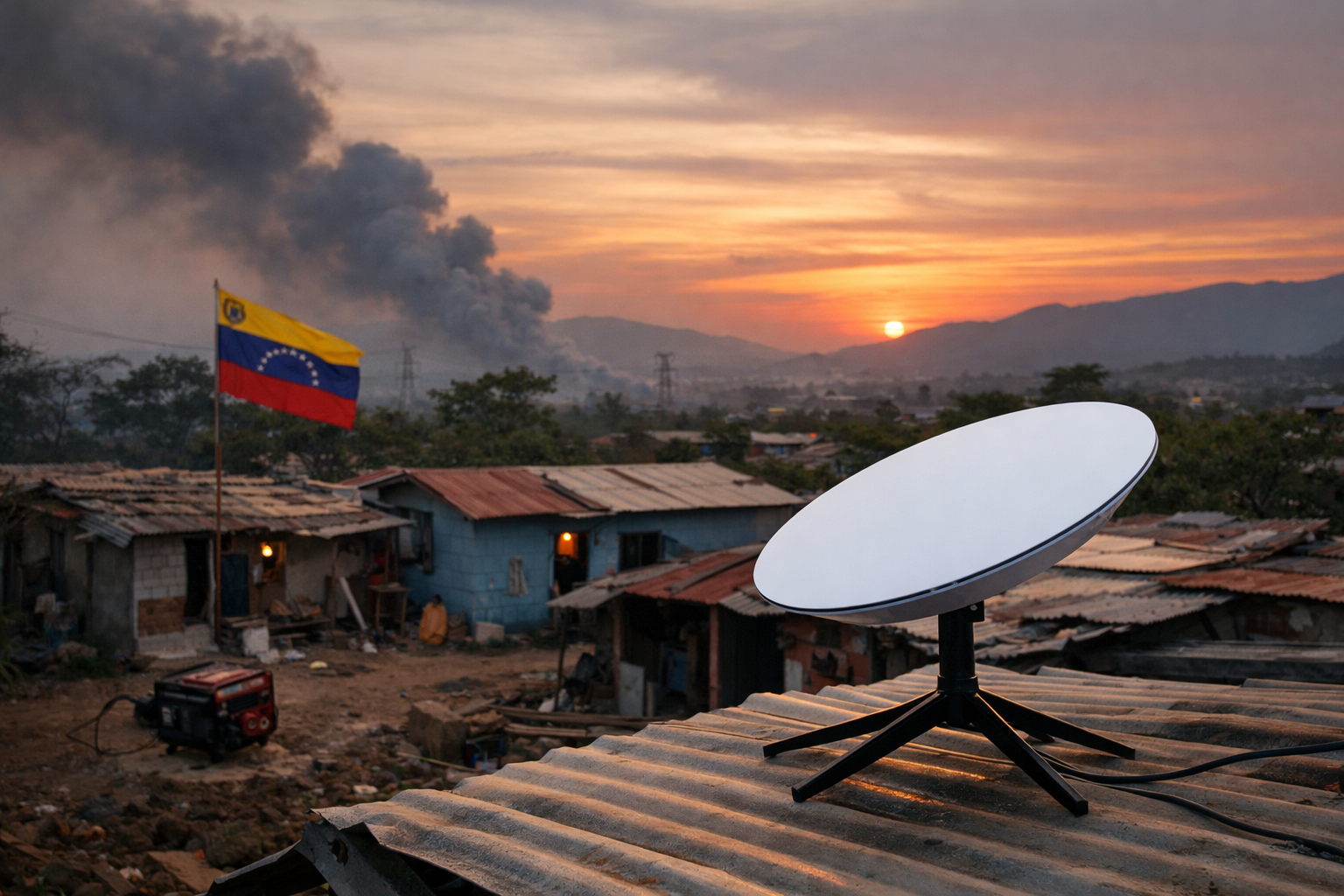
Elon Musk’s satellite internet service Starlink has begun offering free broadband access to users in Venezuela through Feb. 3, as the country deals with widespread disruption following US airstrikes and the arrest of former leader Nicolas Maduro.
The move places a private technology provider at the centre of a fast-moving geopolitical crisis, where connectivity has become a critical issue alongside security and governance.
Reports of power and internet outages in Caracas and surrounding regions have raised concerns about access to basic communication, particularly as international scrutiny of Washington’s actions intensifies.
Starlink said on Sunday that it was proactively adding service credits to both active and inactive accounts in Venezuela while monitoring regulatory requirements and conditions on the ground.
The company did not give a timeline for when customers in the country might be able to formally purchase the service locally, noting that any updates would be communicated through its official channels.
Connectivity amid disruption
The offer of free service comes after the US carried out a military operation that targeted parts of the Venezuelan capital and nearby states.
Washington said its actions on Jan. 3 focused mainly on Caracas, with additional strikes reported in Miranda, Aragua, and La Guaira.
In the aftermath, local media reported electricity and internet outages in parts of Caracas, with similar disruptions in Miranda over the weekend.
By extending temporary access, Starlink could help restore basic connectivity in areas affected by infrastructure damage or service interruptions.
The company’s availability map still lists Venezuela as “coming soon,” suggesting it has not formally launched there, even though some users appear to already have access.
This has raised questions about how the service is operating in the country and under what regulatory framework.
Starlink operates as a subsidiary of SpaceX, delivering broadband via low-earth-orbit satellites.
Users typically need to purchase specialised hardware to connect to the network, a requirement that may limit broader adoption during a crisis despite the free service credits.
Political uncertainty deepens
The connectivity push is unfolding against a backdrop of sharp political uncertainty.
Following Maduro’s arrest and extradition to face charges including narco-terrorism and election manipulation, US President Donald Trump said Washington would oversee Venezuela’s transition.
Trump also announced on Saturday that Vice President Delcy Rodriguez had been sworn in after Maduro’s capture.
At the same time, he warned that further military action could follow if the new leadership failed to comply with US expectations.
These statements have added to volatility in a country already grappling with economic and social strain.
Global response and precedent
International reaction has been swift.
The UN Security Council is scheduled to meet on Jan. 6 to discuss the legality of the US actions, as several countries, including Brazil and Spain, have criticised the strikes.
The debate is likely to focus not only on military intervention but also on its humanitarian and legal implications.
Venezuela is not the first conflict-affected region where Starlink has been deployed.
The satellite network was previously used in Ukraine to replace communication systems damaged during Russia’s invasion.
While Starlink initially covered much of the cost there, its operations in Ukraine have been funded by a US Department of Defense contract since June 2023.
Starlink has not disclosed how many users are active in Venezuela or the cost of providing free service during the current period.
The post Starlink offers free internet in Venezuela after US airstrikes and Maduro arrest appeared first on Invezz